
Research & Development

Ecosystem and society

By modelling the marine ecosystem, with its environmental components and associated human coactivities, we develop a comprehensive approach to simulate and assess the cumulative environmental and socio-economic impacts of offshore wind farms.

Anticipating the cumulative impacts of offshore wind on the marine ecosystem

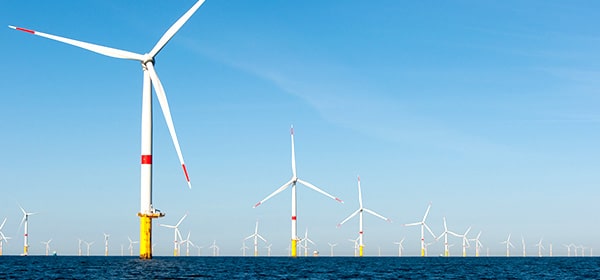
The construction and operation of offshore wind farms can have environmental impacts as well as trigger local socio-economic changes. Being able to characterise these effects using an integrated approach is crucial to anticipating the direct and indirect impacts of this new offshore activity. In this way, the integration of wind farms into the existing socio-ecosystem can be carried out in a manner that takes into account both environmental and societal challenges. To this end, we are developing predictive models of the structure and functioning of marine ecosystems subject to various human activities. This socio-ecosystemic approach allows us to describe how human activities at sea – including shipping traffic, commercial fishing, raw material extraction, and offshore wind development – can impact the overall functioning of a socio-ecosystem. The tools we are developing make it possible to simulate different deployment scenarios for offshore wind farms, anticipate cumulative impacts and support decision-making.

Anticipating the cumulative impacts of offshore wind on the marine ecosystem

R&D topics linked to the needs of the offshore wind sector

A dedicated team and resources for better assessing cumulative impacts

Our Ecosystem & Society Department brings together a wide range of expertise: ecology, oceanography, mathematics and computer science, geography, sociology, and political science. This diversity allows us to address issues from multiple angles, including trophic modelling, socio-ecosystem analysis, and social perception studies.

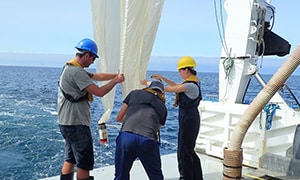
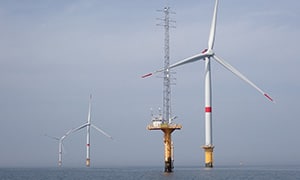
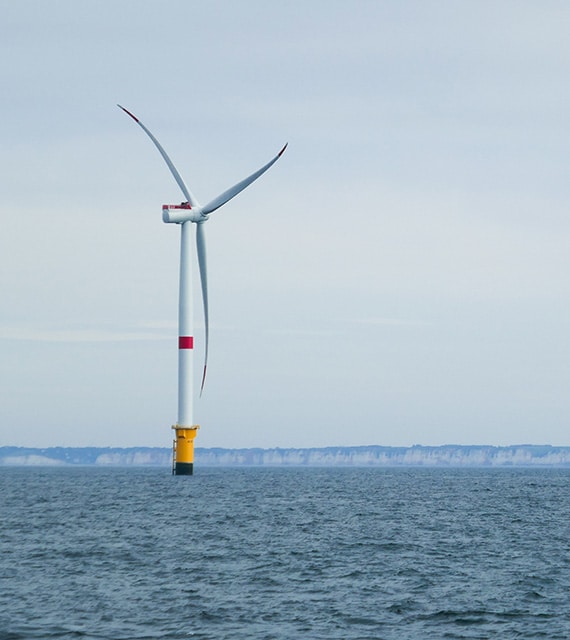
To feed our models with reliable data, we rely on unique infrastructures, such as a multi-instrumented met mast located at the edge of the Fécamp offshore wind farm. The environmental data collected is used to develop a local model to assess the potential impact of the wind farm(DRACCAR-MMERMAID project). At a broader scale, these data contribute to a regional model representing the heavily anthropised ecosystem of the eastern English Channel and southern North Sea, used to analyse cumulative impacts of multiple human activities and climate change.

Examples of international collaborations

Logo Institut royal des Sciences naturelles de Belgique

The Royal Belgian Institute of Natural Sciences is a leading scientific body involved in assessing the ecological impacts of Belgian offshore wind farms in the North Sea. Since 2008, it has been coordinating a programme to analyse the effects of these farms on marine biodiversity, as well as on sediment dynamics and carbon storage. It is involved in the NESTORE R&D project and contributes to improving tools for assessing the cumulative impacts of offshore wind energy.

Logo IEA Wind

We participate in CYCLEWIND, part of the IEA Wind TCP, an international programme for technological collaboration on wind energy. Bringing together 22 partners, it aims to harmonise and improve life-cycle analysis practices in the wind energy sector. Our institute contributes to improving environmental impact methodologies and developing policy recommendations for better LCA criteria in offshore wind tenders.

Logo Université de Gand

The University of Ghent is a leading Belgian academic institution, renowned for its interdisciplinary research and excellence in science, engineering and innovation. As a partner in the European project ORESA, we work together on a sustainability accelerator supporting around 30 SMEs in designing sustainable marine energy solutions.

Logo Université technique de Berlin

The Technische Universität Berlin is a German institution renowned for its cutting-edge research in engineering, energy and digital technologies, with a strong focus on industrial innovation and sustainability. It participates in the European project COMPASS, which we are coordinating, bringing engineering expertise to model offshore wind farms across their entire life cycle. This helps develop impact assessment methods that enhance project sustainability.

Our R&D projects – Ecosystem & Society

See all
Closed
In progress

Our team and our partners testify

Know more

Would you like to know more ?