Research & Development
Project
EOLENMER
Science-environment-society observatory on the roll-out of offshore wind turbines
- Duration: 54 months (2023 - 2027)
- Budget: €4,500K
Motivation & background
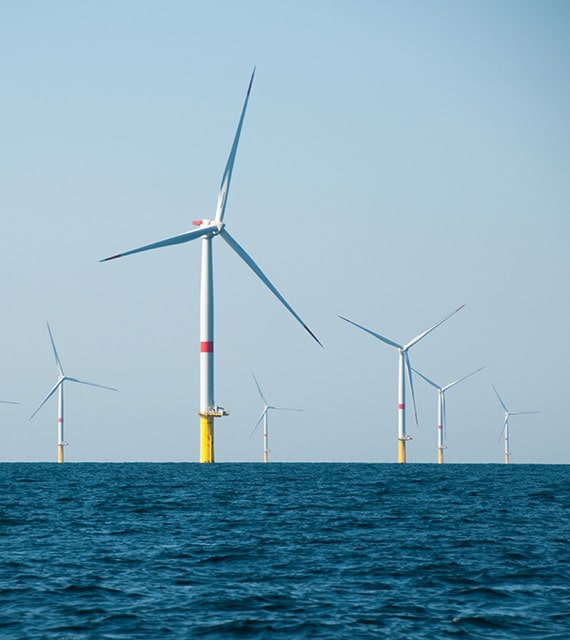
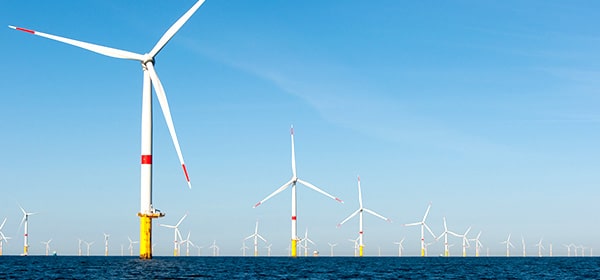
The 2020s are likely to be the decade in which offshore wind farms are developed worldwide in response to climate change and sustainable development goals. Today, their global capacity stands at 29.1 GW, which, at the end of 2019, accounted for 5 per cent of total global wind power capacity. Since the world’s first offshore wind turbine was installed in Denmark in 1991, Europe has led the way in offshore wind development. In 2019, 5,047 offshore wind turbines were installed along European coastlines, comprising 110 wind farms generating 22.1 GW. These developments are often located on densely populated coastlines, raising questions about human–environment interactions, spatial planning and cumulative impacts with other human activities, particularly fishing. A better understanding of how socio-ecological systems function and how they evolve as a result of choices made in the energy sector is essential for the governance of both these systems and energy developments.
Objective
- Comprendre l’articulation que vont développer les parcs éoliens en mer avec le milieu marin et les territoires.
Contenu scientifique
Local assessment
Baseline assessment of the selected sites, analysing the challenges of offshore wind energy and the dynamics among local stakeholders.
Thematic monitoring
To analyse and monitor, preferably on an annual basis and in line with current scientific approaches in the various fields, the relationships between wind farms and marine and terrestrial environments, as well as at the local level (e.g. employment, tourism, fisheries, property values, landscape).

Open, interdisciplinary and participatory monitoring
Monitoring of issues or aspects of the relationship between wind farms and the environment, enabling existing analytical frameworks and methods to be broadened and shared with non-academic stakeholders in the relevant regions or sectors.
Expected results
EOLENMER will enable us to identify and monitor the issues raised by the installation of offshore wind turbines (assessment); to measure how these issues evolve (thematic monitoring); and to explore and critically examine the methods used to evaluate and measure them, where these are subject to controversy (open monitoring).
Conclusion
Lorem ipsum dolor sit amet consectetur.
Sagittis maecenas aliquam integer lobortis eu dignissim blandit tellus metus. Amet et tristique malesuada mattis pharetra bibendum purus id. Risus in elit ullamcorper ut. Imperdiet amet id feugiat arcu malesuada at ut vulputate condimentum.
Partners
This project is led by the AMURE laboratory.
Funding
This project receives funding from ADEME.
Pour aller plus loin
Ajoutez votre titre ici
Lorem ipsum dolor sit amet, consectetur adipiscing ut elit tellus
Ajoutez votre titre ici
Lorem ipsum dolor sit amet, consectetur adipiscing ut elit tellus
Ajoutez votre titre ici
Lorem ipsum dolor sit amet, consectetur adipiscing ut elit tellus