Services

We support you at every step of an offshore wind project’s lifecycle. Benefit from expert, independent and scientifically sound support. We act as a trusted technical partner to help you make informed decisions, minimise risks and enhance the overall performance of your projects.
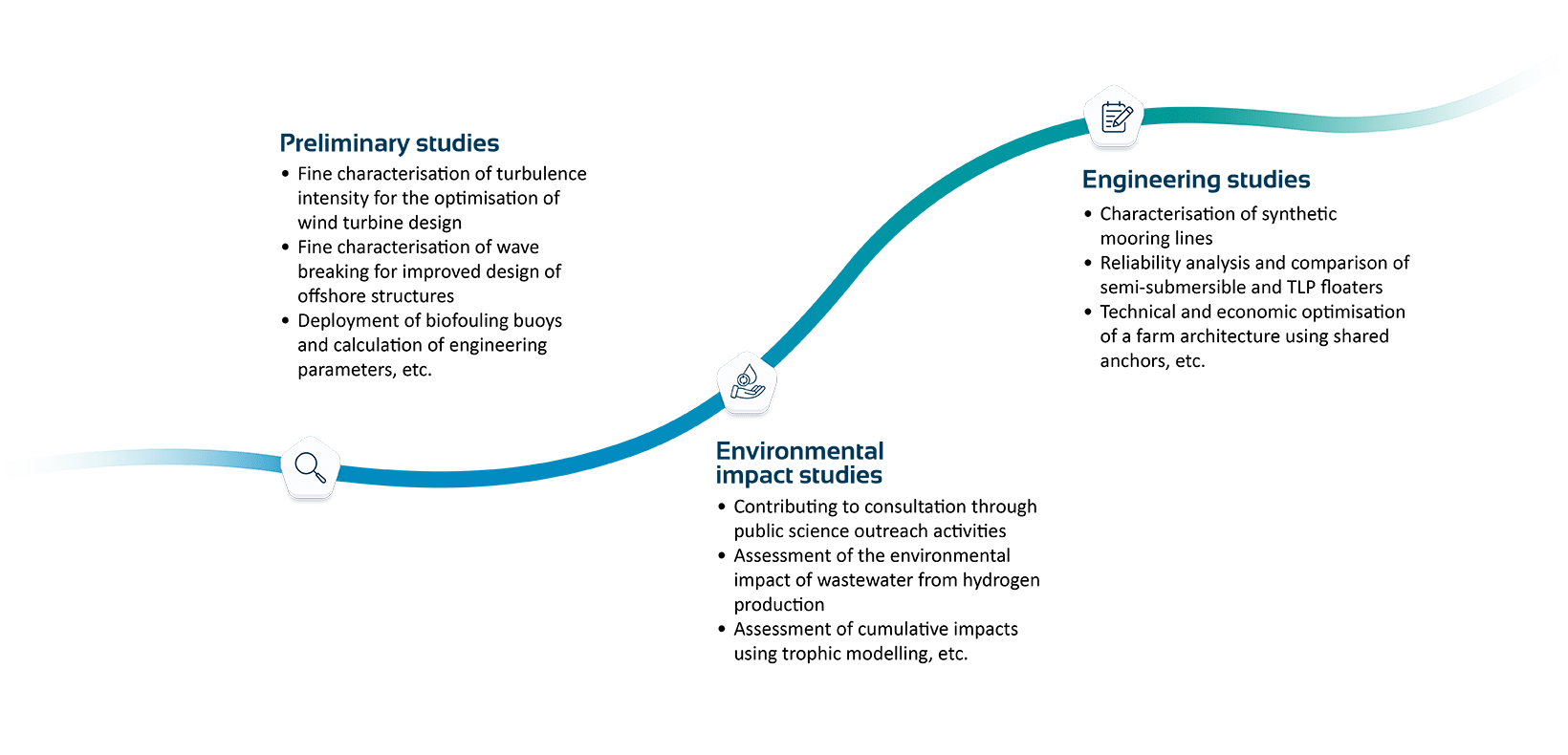
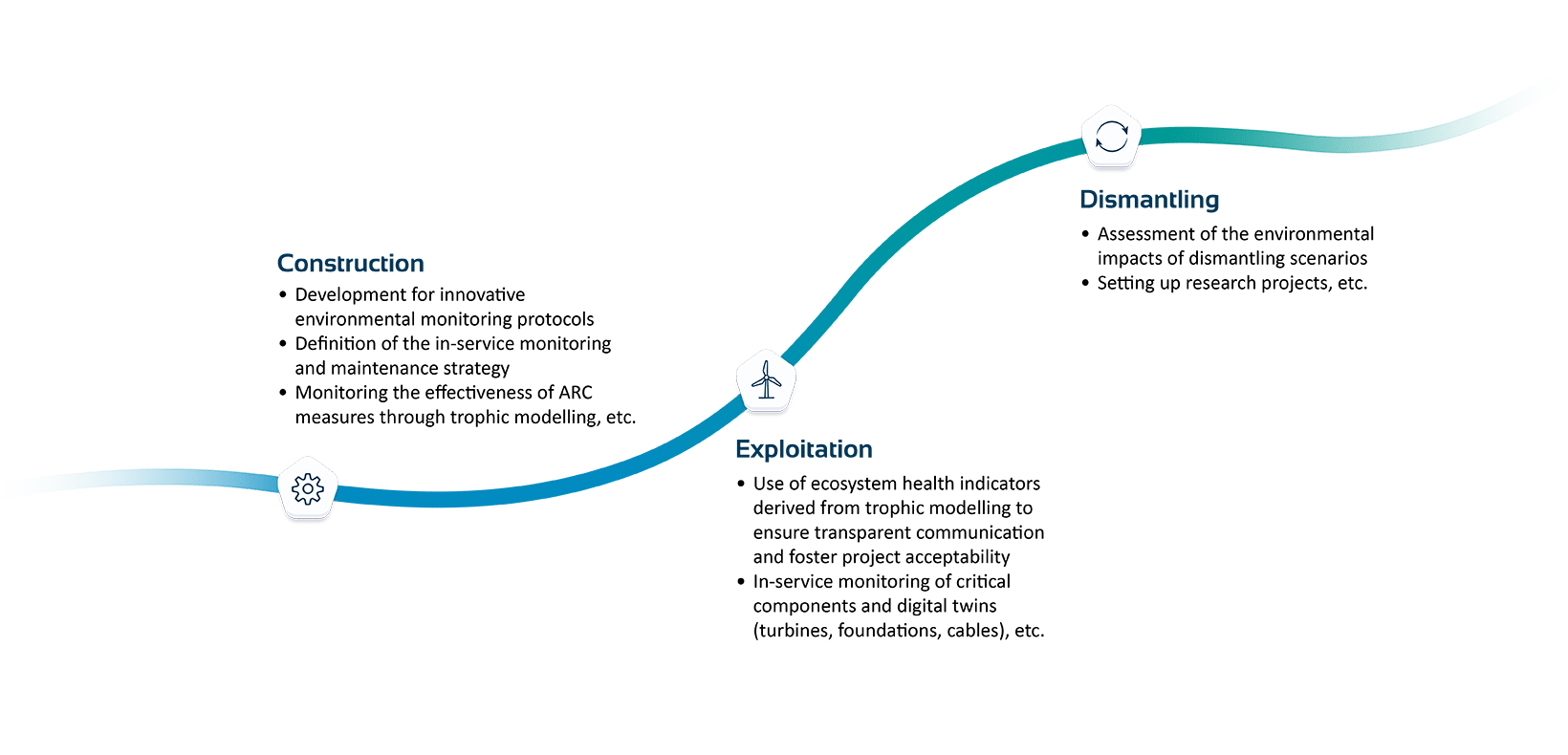
Benefit from expert, independent and scientifically sound support. Partner with a company capable of supporting your offshore wind projects from planning through to operation.
We draw on our multidisciplinary teams, benchmark models, proprietary technologies and experimental platforms to optimise performance, mitigate risks and ensure the robustness of your offshore wind projects.
Services
We carry out science outreach initiatives aimed at the general public to improve public understanding of our projects. These initiatives are based on quantitative and scientific data.
We support project developers in identifying the specific challenges associated with a wind farm by monitoring shifts in public perception. This analysis is based on automated processing of online news articles.
Training
We offer training courses on offshore wind for the general public and businesses. These sessions aim to enhance understanding of the technical, environmental and societal issues facing the sector.
Services
We develop an ecosystem modelling methodology tailored to your objectives and the characteristics of the area under study. This approach enables us to assess cumulative impacts from the environmental impact assessment right through to the dismantling of the wind farm.
We assess cumulative effects during the initial impact assessment phase using predefined scenarios. We model the ecosystem’s trophic functioning and develop several project scenarios. We calculate ecosystem health indicators to estimate the project’s impact and the farm’s contribution to cumulative effects.
We monitor the effectiveness of ARC measures during the construction phase. We produce ecosystem health indicators, as well as graphs and maps, to quantify and visualise the effectiveness of ARC measures.
We assess cumulative effects during the operational phase, based on predefined cumulative impact scenarios. We compare monitoring data with model predictions to identify discrepancies and pinpoint effects attributable to the wind farm. The model is updated with six years of data to refine the predictions. We produce indicators, analyses and maps to assess the resilience of the ecosystem and the effectiveness of ARC measures.
Services
We assist project leaders in selecting suitable multimodal instrumentation for environmental monitoring on measurement masts or multi-instrumented buoys.
We develop innovative monitoring protocols, tailored to the specific details of the applicant’s project, to monitor the farm’s impact.
Monitoring the impact of offshore wind farms and their development on marine megafauna (birds, bats, fish and marine mammals) requires integrated monitoring methods. France Energies Marines therefore offers to support you, in collaboration with your consuling firms, in setting up multimodal environmental monitoring programmes that combine monitoring methods to meet regulatory requirements, optimise the costs associated with data acquisition and processing, and produce more reliable and comprehensive information.
The support provided includes defining a data acquisition protocol (instrument, acquisition cycle, necessary maintenance), setting up a data transfer process and storage procedures, configuring an annotation platform, annotating images, setting up and training automated models, and finally analysing data.
We identify the research projects that need to be developed to address the site’s specific challenges.
Acoustic telemetry enables the characterisation of the initial state, followed by monitoring of the project’s impact during the construction, operational and decommissioning phases of the wind farm. Our expertise across the entire process of implementing and processing this technique enables us to deliver high-value-added collaboration.
We design the acoustic telemetry network, assist with its implementation (deployment and tagging of target species), analyse the data using processing algorithms and interpret it based on our expertise, before integrating it into the European network (ETN). Analysis of the results will provide a better understanding of the farm’s impact on fish populations.
Drawing on three years of acoustic and image data collected and analysed at the Fécamp mast, we support engineering firms in implementing automated models for the on-site processing of data intended for the environmental monitoring of wind farms. These tools help to optimise the volume of data to be processed, improve reliability and achieve better detection of marine mammals and birds.
Our support involves defining a data acquisition protocol, setting up a data transfer process, configuring an annotation platform, annotating images, implementing and training automated models, and finally analysing the data. France Energies Marines draws on experience in deploying various types of instruments, having acquired and processed several hundred terabytes of video data in less than two years, as well as in developing its own automated models.
Services
We carry out hydrodynamic and hydrosedimentary modelling to simulate the movement of underwater dunes. This analysis enables us to anticipate scouring phenomena that could affect the foundations of structures.
In order to anticipate chemical risks and ensure they are taken into account in ARC measures, we conduct studies on the dispersion of contaminants such as aluminium from anti-corrosion coatings, biocides associated with hydrogen production, as well as microplastics and lubricants. The development of hydrodynamic models enables the modelling of the dispersion of chemical elements in the water column and the study of their evolution over time. This modelling also allows for the consideration of contributions from other natural or anthropogenic sources of these elements to facilitate a comparative analysis. This modelling can constitute the first step in risk characterisation in accordance with the European REACH Regulation.
We use unique coupled ocean-wave-atmosphere models that include wave-wind retro-coupling. This advanced modelling provides high-resolution spatial and temporal data, enabling more reliable input data for more realistic design calculations.
Services
Using TwinDAR©, our turbulence intensity reconstruction algorithm, we calculate turbulence intensity from both floating and ground-based lidar measurements with greater reliability than traditional methods, enabling a detailed characterisation of on-site wind conditions. These refined values allow for the definition of more accurate load cases, optimising wind turbine design and thereby reducing CAPEX.
For large-scale potential assessment areas, we optimise the layout of lidar sensors to characterise extensive areas and calculate energy production capacity.
We are conducting tests and pre-validation of the floating lidars on the Fécamp met mast to ensure the quality and reliability of the data collected.
Tools and software
Services
Using TAIFU‑WindWaves©, we accurately calculate joint wind-wave statistics under cyclonic conditions, which are essential for generating extreme load cases. These analyses enable the performance and reliability of offshore structures to be optimised right from the design stage.
We characterise wave breaking and quantify its impact on offshore structures using a tool developed by France Energies Marines.
Tools and software
Services
We offer wake modelling between wind farms using various types of models: engineering wake models and mesoscale models with parameterisation. This comparison provides a range of results that can be used to refine energy yield calculations and recommendations for design load limits, as well as to correct wind speed and turbulence measurements.
Services
We carry out mooring studies for synthetic lines using the Polyamoor law. This law takes into account the visco-elasto-plastic behaviour of materials in order to accurately represent their response under real-world conditions.
We identify the parameters required to characterise the short-term behaviour of synthetic fibre mooring lines. We take into account the specific characteristics of the rope used by the client in order to optimise the design and improve the system’s reliability.
We determine the parameters needed to characterise the long-term behaviour of synthetic fibre mooring lines, tailored to the customer’s specific rope. This analysis enables us to predict the need for re-tensioning and ensure the durability of the mooring system.
Services
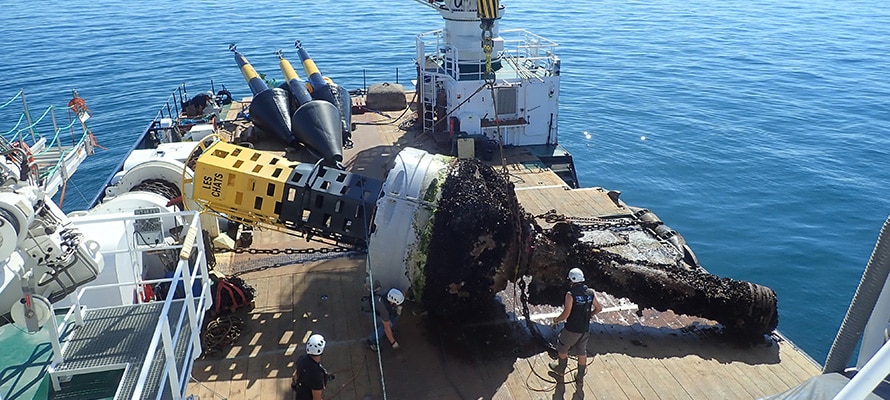
We are deploying instrumented buoys designed to measure biofouling during the project’s development phase.
We carry out in situ monitoring campaigns over several years to accurately characterise the development of biofouling.
We analyse the data collected and calculate the engineering parameters required for the design, in order to factor in the effect of biofouling when design the systems.
We determine the added masses and project-specific hydrodynamic parameters in order to optimise the performance and robustness of structures exposed to biofouling.
Services
We optimise the technical and economic design of floating wind farms by incorporating shared mooring solutions. This approach reduces installation costs whilst improving the overall efficiency of the system.
Services
We develop scenarios for changes in energy consumption in order to anticipate future needs and ensure that infrastructure is appropriately scaled.
We define the topology of a marine renewable energy farm. The farm may consist of floating solar, wind or wave energy systems, and may be configured as a single-source or multi-source system. We calculate its output by factoring in losses associated with wake effects, electrical conduction and equipment reliability.
We assess the electrical balance of an isolated microgrid. We calculate all its key performance indicators, such as LCOE, CAPEX, OPEX and LPSP, to provide a comprehensive overview of its performance.
We optimise the configuration of an isolated microgrid by analysing its performance indicators. In this way, we improve its energy efficiency and economic viability.
Services
We compare the advantages and limitations of semi-submersible and TLP platforms for floating substation applications. In doing so, we identify the solution best suited to the project’s technical and economic constraints.
We analyse the reliability of floating substations and develop an optimised maintenance strategy. This approach helps to reduce risks and improve the system’s operational performance.
Services
We evaluate the most efficient configurations for producing hydrogen from offshore wind farms. We base our analysis on key indicators such as electricity production capacity, hydrogen production potential and LCOH.
We define environmental monitoring requirements tailored to offshore hydrogen production facilities, to ensure that monitoring is compatible with the challenges posed by the site.
We are analysing the impact of wastewater discharged from hydrogen production on the marine environment. In particular, we are assessing its effects on organisms, biological tissues and the entire food chain.
Services
We support project leaders in selecting innovative in-service monitoring solutions to anticipate failures and ensure the reliability of dynamic cables. We develop failure scenarios, select the appropriate sensors and determine their optimal positioning based on the phenomena to be monitored and the project’s constraints.
We are deploying a digital twin to optimise the monitoring of critical components, detect anomalies and refine service life calculations, in order to plan maintenance whilst reducing operating costs. This approach relies on structured data, virtual sensors and a comprehensive model of the wind turbine, enhanced by reduced-order models to improve monitoring and decision-making.
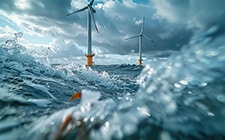
This team brings together specialists in atmospheric physics and physical oceanography. It combines numerical modelling, tank tests, at-sea experiments and data analysis. Its aim is to ensure the profitability of wind farm projects.
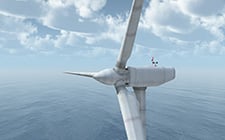
This team brings together specialists from a range of disciplines, including structural mechanics, hydrodynamics, applied mathematics, geotechnical engineering and electrical engineering. It combines numerical modelling, tool development, laboratory testing and offshore experiments. Its aim is to improve the performance of offshore wind systems.
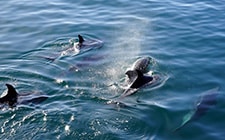
This team brings together experts specialising in the study of marine ecosystems and data processing specialists. It combines ecological expertise with artificial intelligence to model interactions between species and infrastructure, and to develop monitoring tools tailored to the sector’s needs. Its aim is to improve our understanding of the interactions between wildlife and offshore wind.
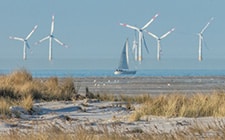
This team brings together experts from the fields of ecology, oceanography, mathematics, geography and sociology. It draws on these complementary skills to analyse the issues from different angles, using trophic modelling, an ecosystem-based approach and research into social perceptions. Its aim: to improve the assessment of the cumulative impacts of offshore wind.
Discover the highlights of our Institute’s R&D activities
We use cookies to personalize content, provide social media features, and analyze our traffic. We also share information about your use of our site with our analytics partners. You can change your preferences at any time. For more information, please see our Privacy Policy and Cookie Policy.