
Could you tell us about your early months at France Energies Marines?
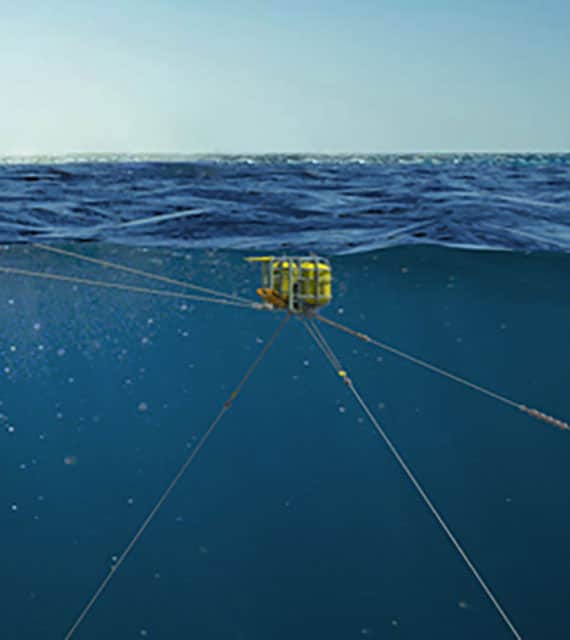
I decided to apply to France Energies Marines because I wanted to work in engineering within the maritime sector, with a strong focus on instrumentation. I was therefore very keen on this role, which ticked all the boxes for what I was looking for. However, apart from having experience in a research institute, my profile did not really match the one described in the job advertisement. Despite this, I applied, France Energies Marines put their trust in me, and I joined the team in April 2022. My first assignment was to manage the DYNAMO project, which involved the in-service monitoring of dynamic power cables and included eight private and public partners. The challenge for me was to ensure that everyone felt involved and that the schedule was adhered to, without being anyone’s line manager. To chair the meetings, I also needed to understand what everyone was talking about. The technical tasks I had to carry out, largely relating to the state of the art, really helped me get to grips with the subject.
What happened next?
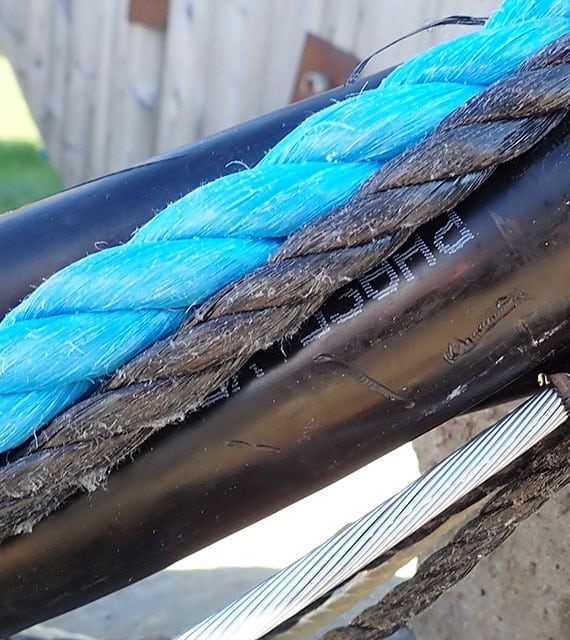
In April 2023, my manager offered me the chance to lead another project, OPHARM, focusing on the integration of offshore wind and hydrogen. It was a great recognition of my work and my ability to adapt. Once again, I made sure to familiarise myself thoroughly with a range of technical knowledge so that I could contribute effectively to discussions with my colleagues and the various partners. At the end of 2023, I continued my project manager role with the launch of OPHARM2, a new project to take offshore hydrogen production from wind farms a step further. At the same time, the HT-20MW project was launched to develop a connection hub for a 20 MW floating wind turbine. Our Institute was responsible for qualifying an in-service monitoring solution for dynamic cables. I co-led this work with my colleague. In July 2024, we designed and carried out a series of sea trials in which the deformation of a real power cable was monitored over time and space using six different technologies. We worked effectively as a team from the specification of the tests through to the analysis of the collected data, including the launch of a call for expressions of interest. It was a huge undertaking that allowed me to develop my skills. We carried out a truly innovative experiment and achieved results that were eagerly awaited by the industry.
How would you summarise your approach to the diffrent tasks entrusted to you?
I now feel fully confident discussing the subject of dynamic power cables, whether within my team or within the scientific community, although it must be acknowledged that this field remains very male-dominated. Whilst I have been able to count on the support of my colleagues and management since I joined France Energies Marines, I have always made it a point of honour to be proactive, to demonstrate a high degree of rigour and to quickly acquire the necessary technical knowledge. In short, it is a winning combination of individual tenacity, mutual trust and collective drive.