

What is Quiet Oceans?
Quiet Oceans is an environmental consultancy set up in 2010. It specialises in assessing the effects of underwater noise on marine fauna and proposing reduction measures. Underwater noise is generated by human activities such as construction work and maritime traffic. Quiet Oceans is involved in the upstream project phase during impact studies and initial environmental assessments, then in the construction phase to monitor and apply site rules aimed at mitigating acoustic risks, and finally during the operational phase. We use noise monitoring systems and marine mammal detection system. We also work in other areas, in particular on the implementation of the Marine Strategy Framework Directive in terms of the assessment of noise levels in territorial waters. For instance, Quiet Oceans has developed an online platform called Quonops Online Services for mapping and forecasting underwater noise in order to meet the needs of government departments and industry.
What role do you play in the DRACCAR-MMERMAID project?
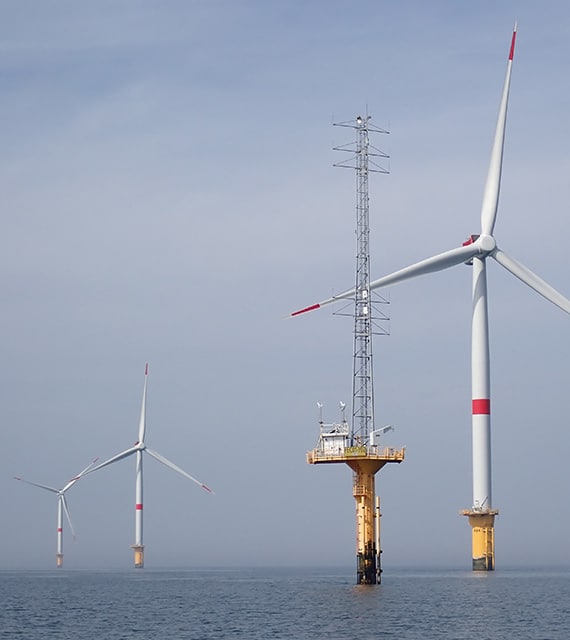
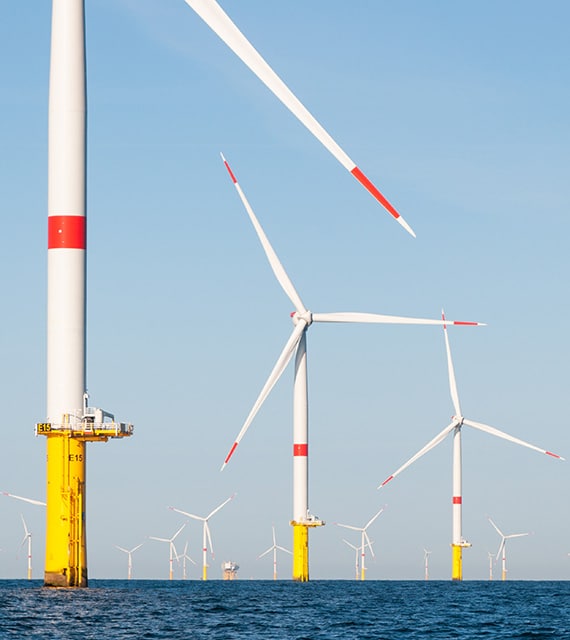
Our primary role is to provide expertise on the acquisition of underwater noise data at the Fécamp met mast, near which several hydrophones are deployed. In passive acoustics, it is not always straightforward to obtain high quality sound. Many parasite sounds can interfere with the signal and mask useful information. It is therefore very important to have good knowledge of the acquisition chain and the environment in which the system is deployed, so as to be able to capture the full chorus of underwater sound, from the low frequencies of vessels and whales up to the high frequencies of porpoises. Our second role in the project is to provide statistical noise mapping for the Channel area, including the environmental contribution (wind, waves), maritime traffic and wind farms in operation. This underwater noise data is integrated into an ecosystem model developed as part of the project, in order to assess the cumulative effects, at the scale of the coastline, on ecosystem functioning. This new approach will lead to a better understanding of the importance of human activities, and in particular the effects of offshore renewable energy, through the underwater noise component in the evolution of the ecosystem.
What does Quiet Oceans have to gain from this project?
We often tend to work on individual projects. The DRACCAR-MMERMAID research project gives us the opportunity to be involved in studying cumulative effects at the scale of an entire coastline. It is also the chance for us to contribute to the integration of a new factor, that of underwater noise, in the ecological assessment of the Channel, which is a game-changer. Additionally, thanks to the cross-disciplinary nature of the project, the partners mutually benefit from learning about the topics studied and instruments used by the other partners.