Research & Development
Projet
SEMMACAPE
- Duration: 36 months (2019 - 2022)
- Budget: €600K
Motivation & background
The development of offshore renewable energy is booming in France. Between 2011 and 2017, the French government has launched 5 calls for tenders and expressions of interest for a total of 7 wind farms installed, 4 wind pilot farms and 2 tidal pilot farms. Over the next 5 years, 5 additional calls for tenders are scheduled, which could double the installed capacity at sea. According to the Environmental Code, project developers must produce environmental impact studies, particularly on marine megafauna (birds, mammals, turtles, big fish…).
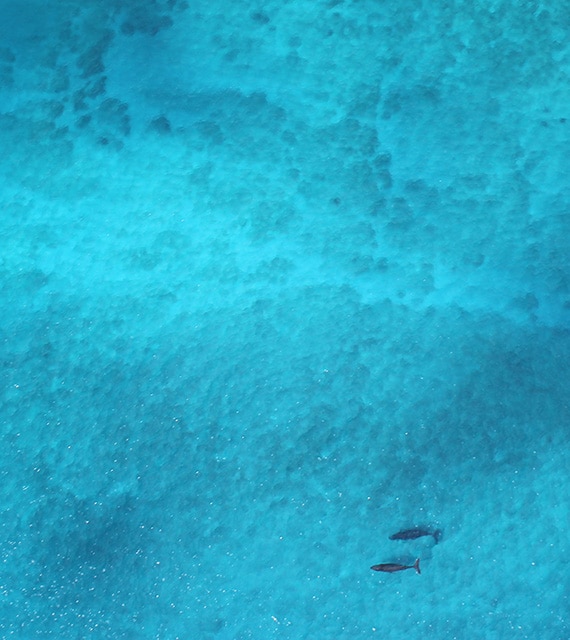
The analysis of the impacts of an ORE project generally requires aerial observations of marine megafauna in order to better characterise the frequentation of species in the proposed areas. This includes monitoring during the construction, operation and decommissioning phases, a total of about 30 years.
These observations are classically based on aerial overflights by specialised naturalist observers. However, in the age of big data, recent scientific and technological developments offer new prospects for radically improving the cost-effectiveness of such monitoring
L’analyse des impacts d’un projet EMR nécessite généralement des observations aériennes de la mégafaune marine afin de mieux caractériser la fréquentation des espèces dans les zones proposées. Cela inclut un suivi pendant les phases de construction, d’exploitation et de démantèlement, soit au total environ 30 ans.
Ces observations sont classiquement basées sur des survols aériens embarquant des observateurs naturalistes spécialisés. Cependant, à l’ère du big data, les récents développements scientifiques et technologiques offrent des perspectives nouvelles pour améliorer radicalement le rapport coût/efficacité de ces suivis.

Objective
- To demonstrate the ability of aerial photography processing and analysis software to automatically inventory marine megafauna.
Scientific content
Aerial megafauna observation campaign (standard visual method and VHR digital photography system), integrating the seasonal variability of species and environmental conditions.
Development and qualification of 2 types of automatic aerial photography processing algorithms for animal identification and classification:
• Detection by deep neural (end-to-end) network, moving directly from the global image to bounding boxes
• Detection of anomalies by unsupervised deep learning
Assessment of the performance of each detection method tested based on indicators classed by species or group of species, as well as according to environmental conditions.
Resources
Conclusion
Lorem ipsum dolor sit amet consectetur.
Sagittis maecenas aliquam integer lobortis eu dignissim blandit tellus metus. Amet et tristique malesuada mattis pharetra bibendum purus id. Risus in elit ullamcorper ut. Imperdiet amet id feugiat arcu malesuada at ut vulputate condimentum.
Partners
This project was led by UMR IRISA – Université Bretagne Sud.
Funding
This project received an ADEME grant under the “Sustainable Energies” call for research projects (2018-2019).
Accreditation
This project was certified by the maritime clusters Pôle Mer Bretagne Atlantique et le Pôle Mer Méditerranée
Pour aller plus loin
Ajoutez votre titre ici
Lorem ipsum dolor sit amet, consectetur adipiscing ut elit tellus
Ajoutez votre titre ici
Lorem ipsum dolor sit amet, consectetur adipiscing ut elit tellus
Ajoutez votre titre ici
Lorem ipsum dolor sit amet, consectetur adipiscing ut elit tellus