Recherche & Développement
Projet
Chemical risks of elements released from offshore wind farm components
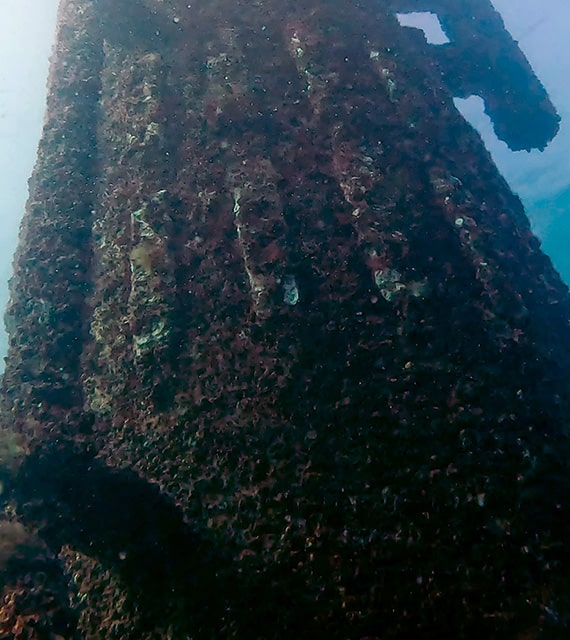
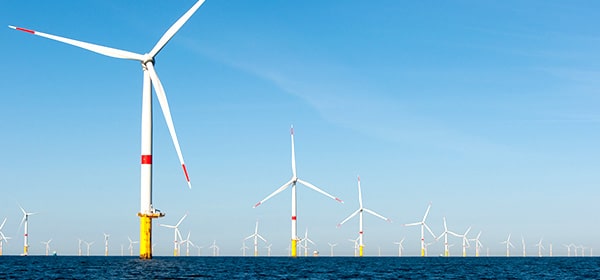
The release of chemicals from offshore wind farms raises questions about their impacts on water and sediment quality. To assess this chemical pressure, it is essential to identify the elements released by all turbine components, understand their behavior in the water column and sediments, and evaluate their ecotoxicological effects. Corrosion protection systems, such as Galvanic Anode Cathodic Protection (GACP) systems, release metals into seawater with known ecotoxicological effects in seawater, but their interaction with sediment remains to be determined. Similarly, the elements produced by Impressed Current Cathodic Protection (ICCP) systems and their ecotoxicological effects are not fully identified. In addition, the substances released through the degradation of synthetic mooring lines used for floating wind turbines have not yet been studied.
To enhance the assessment of environmental risks linked to emissions of chemical elements from offshore wind farms. PEARL will provide a more precise definition of environmental pressures associated with GACP and ICCP, along with an initial characterisation of pressures associated with synthetic mooring lines.
• Study of the kinetics of chlorination by-products from ICCP systems
• Analysis of interactions between dissolved elements from GACP, suspended matter and sediment
• Assessment of the ecotoxicological effect of the elements release by ICCP systems with chronic experimentations over different life stages
• Assessment of the ecotoxicological effect of the elements release by GACP systems with chronic and trophic experimentations
• Early toxicity evaluation of the chemical elements released from the synthetic mooring lines
• Development and testing of dedicated aging protocols for synthetic fibres in closed tap water
• Identification and quantifying of chemical elements that may be released during representative use
• Definition of the chemical exposome in different marine environments by measuring the concentration of several elements in contrasting environment influenced or not by wind farms
• Quantification of tracer chemicals from GACP and ICCP along vertical and horizontal gradients to study fine-scale accumulation of chemical compounds in seawater, sediment and various marine organisms
• Testing of an active biomonitoring (caging approach) adapted to offshore wind context
• Development of morphodynamic model on a theorical wind farm to assess the dispersion of elements from the GACP systems around the foundations and anticipate the GACP concentration levels in sediments
• Prediction of environmental concentrations of GACP and ICCP elements, considering various inputs from OWF itself but also from rivers, harbours and shipping at English Channel and North Sea scale
• Improvement of a food web contamination module (ECOTRACER) for GACP context in the Gulf of Lion and adaptation to the English Channel area

Lorem ipsum dolor sit amet consectetur.
Sagittis maecenas aliquam integer lobortis eu dignissim blandit tellus metus. Amet et tristique malesuada mattis pharetra bibendum purus id. Risus in elit ullamcorper ut. Imperdiet amet id feugiat arcu malesuada at ut vulputate condimentum.
This project is led by France Energies Marines.
This project receives French State funding managed by the National Research Agency under the France 2030 investment plan (ANR-10-IEED-0006-34). It also receives financial support from the Brittany, Normandy and SUD Provence-Alpes-Côte d’Azur regions, and by the Normandy channel offshore wind arm biodiversity Fund – Funded in accordance with the terms and conditions of the government’s specifications for the project.
This project has been certified by the maritime cluster Pôle Mer Bretagne Atlantique..
Lorem ipsum dolor sit amet, consectetur adipiscing ut elit tellus
We use cookies to personalize content, provide social media features, and analyze our traffic. We also share information about your use of our site with our analytics partners. You can change your preferences at any time. For more information, please see our Privacy Policy and Cookie Policy.