Research & Development

Projet

MUTANC2

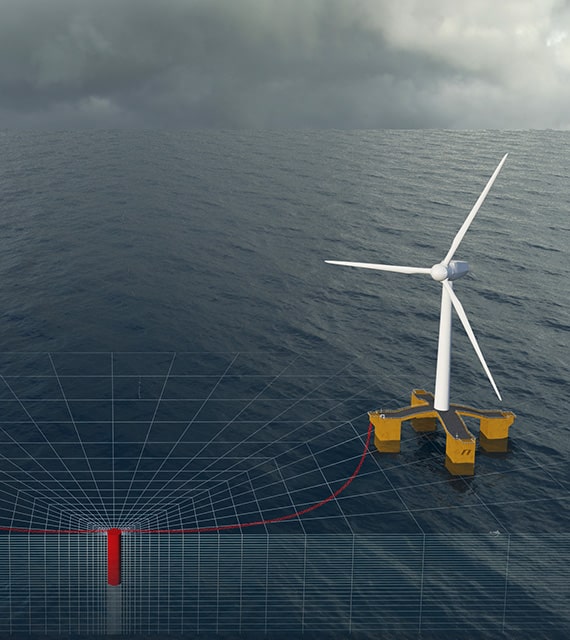
Shared anchors and mooring lines for offshore wind farms

Motivation & background

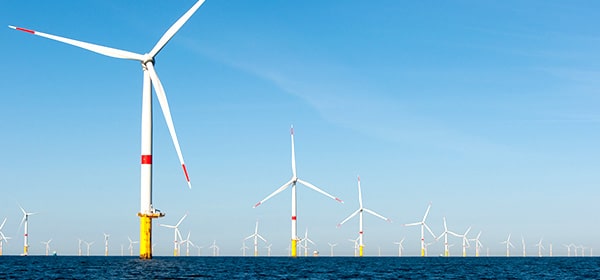
The market push to reduce levelized cost of energy (LCOE) of floating offshore wind farms introduces breakthrough innovations in farm design and technological challenges. A way to achieve cost reduction is by sharing anchors, and even more by sharing mooring lines between floating offshore wind turbines. The MUTANC project has studied shared pile anchors in sandy soil from 2021 to 2024 advocating a cost reduction from 16% to 30% for farms with 100 turbines. However, questions remain.

  • What recommendations can be established between shared anchor loadings and the design of piles in sandy soil?
  • Is it possible to design an efficient shared mooring line configuration while mitigating risks to integrity and production failure?
  • How do installation, operation, maintenance, and decommissioning challenges impact anchor costs and operational time, and how can they be integrated into an LCOE cost model?
Projet MUTANC2

Objectives

  • To provide a practical engineering methodology and design tools for industry practice, based on a thorough understanding of pile behavior in sand under horizontal cyclic and multidirectional loading
  • To explore the use of shared mooring line systems to ensure their integrity and prevent the potential impact of failure on production
  • To improve the cost model developed in the MUTANC project with installation and maintenance specificities impacting the cost and the operational availability

Scientific content

Shared anchors layout analysis

• Definition of site-specific anchor layout considering metocean directionality and redundancy in mooring lines
• Numerical simulations to perform and compare ultimate limit state (ULS) and accidental limit state (ALS) cases for shared and unshared configurations, and mooring configurations assessment through simplified cost considerations

Shared anchor geotechnical analysis and recommendations

• Experimental geotechnical analysis
• Calibration and validation of a complex geotechnical numerical model using finite element analysis (FEA) and advanced soil constitutive model
• Validation of a simplified soil constitutive model
• Development of a simplified tool for shared pile anchor engineering practice, including the definition of cyclic degradation factors
• Parametric study and analysis of specific cases and cyclic multidirectional stochastic loadings

Shared anchor design practice for certification

• Identification of applicable technical standards based on an overview of critical aspects for shared anchors
• Definition of a global design methodology for shared anchors
• Preparation of guidelines for certification

Shared mooring lines systems analysis

• Literature review of existing shared mooring line systems, case study specifications, and selection of designs
• Development of numerical models and application to specific shared mooring system arrays
• Validation of a shared mooring configuration through basin tests
• Risk assessment


Cost model including installation, operation, maintenance and decommissioning challenges

• Case study specifications
• Study of the impact of sharing on installation, operation, maintenance, and decommissioning scenarios
• Integration into MUTANC cost model

Expected results

  • Optimized mooring line configurations and redundancy strategies adapted to shared anchor systems
  • Advanced numerical tools and methodologies for shared mooring design, validated through physical testing
  • Development of degradation laws, simplified geotechnical models and recommendations for certification, applicable to industry, concerning the behaviour of driven piles in sandy soils under cyclic and multidirectional loadings
  • Definition of relevant installation scenarios for shared systems, detailing associated challenges and cost implications

Conclusion

Lorem ipsum dolor sit amet consectetur.

Sagittis maecenas aliquam integer lobortis eu dignissim blandit tellus metus. Amet et tristique malesuada mattis pharetra bibendum purus id. Risus in elit ullamcorper ut. Imperdiet amet id feugiat arcu malesuada at ut vulputate condimentum.

Partners

This project is led by France Energies Marines.

Logo France Energies Marines
Logo Bureau Veritas 2025
Logo EDF
Logo Oxan Energy 2024
Logo Seaway7
Logo SINTEF
Logo Université Grenoble Alpes
Logo Université Gustave Eiffel
Logo Nantes Université

Funding

This project receives French State funding managed by the National Research Agency under the France 2030 investment plan (ANR-10-IEED-0006-34). It also receives financial support from the Bretagne, Pays de La Loire and SUD Provence-Alpes-Côte d’Azur regions.

Logo France 2030
Logo Région Bretagne
Logo Région Pays de la Loire
Logo Région SUD Provence-Alpes-Côte d'Azur

Accreditation

This project is certified by the maritime clusters Pôle Mer Bretagne Atlantique and Pôle Mer Méditerranée.

Logo Pôle Mer Bretagne Atlantique
Logo Pôle Mer Méditerranée

Pour aller plus loin

Ajoutez votre titre ici

Lorem ipsum dolor sit amet, consectetur adipiscing ut elit tellus

Ajoutez votre titre ici

Lorem ipsum dolor sit amet, consectetur adipiscing ut elit tellus

Ajoutez votre titre ici

Lorem ipsum dolor sit amet, consectetur adipiscing ut elit tellus

Know more

Would you like to know more ?