Research & Development
Projet
ECOCAP
- Duration: 36 mois (2021 - 2024)
- Budget: €2,189K
Motivation & background
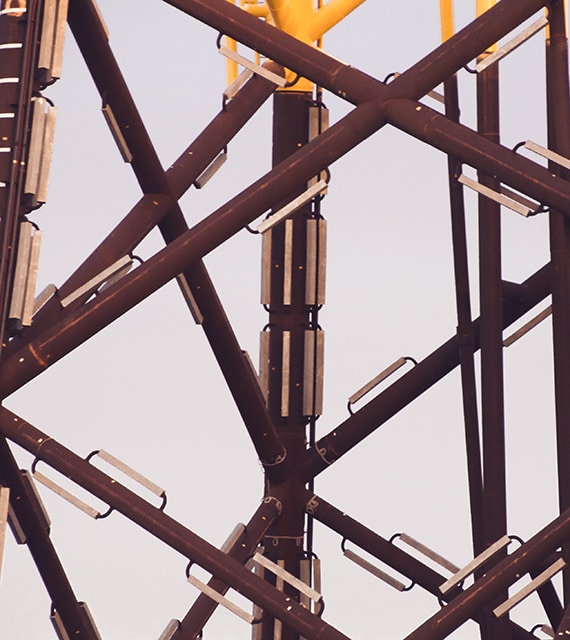
Cathodic protection – such as galvanic anodes (GACP) and impressed current cathodic protection (ICCP) – as well as anti-corrosion paints are widely used to prevent corrosion of metallic materials immersed in seawater. Although effective, these methods result in the release of chemical elements into the marine environment, the extent of which is still poorly understood. Their potential ecotoxicological effects on marine organisms are a cause for concern among environmental authorities and civil society. It is therefore necessary to conduct an in-depth study of the potential environmental impact of these protection methods.

Objective
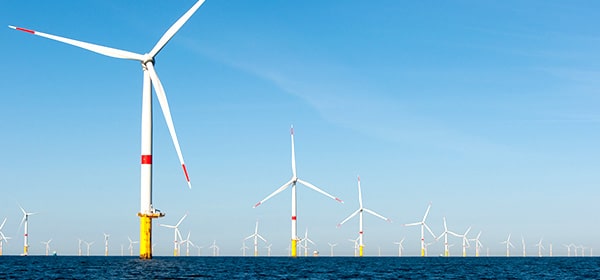
- To produce a knowledge base of the potential environmental impacts of anticorrosion protections commonly used in the offshore renewable energy industry, including galvanic anodes cathodic protections (GACP), impressed current cathodic protections (ICCP) and anticorrosion coatings.
Main achievements
A series of ecotoxicological experiments on aluminium and the cocktail of chemical elements released by GACP systems on various organisms, ranging from microalgae to fish
Chemical risk assessment of aluminium in seawater for various French coastlines
First description of the chlorobrominated elements and compounds generated by ICCP systems under controlled conditions
First toxicity study of elements generated by an ICCP system on sea urchin and oyster larvae
Development of numerical tools to (1) simulate the dispersion in the water column of elements from GACP and ICCP systems and (2) study the potential transfer of released elements into food webs
Resources generated
- Databases:
- Ecotoxicity threshold values for aluminium and chemical elements released by GACP systems
- List of chlorination by-products generated by ICCP systems
- Average concentrations (in situ and modelled) of aluminium and chlorination by-products in offshore wind energy development areas in the English Channel, the Atlantic and the Mediterranean
- Summaries, reports, methodologies:
- Literature review of environmental pressures caused by the use of GACP, ICCP and anti-corrosion paints
- Model for assessing the impact of aluminium on the food web in the Gulf of Lion
- Chemical risk analysis of aluminium in seawater in accordance with the REACH Regulation
- Public report on recommendations regarding the chemical risk of anti-corrosion systems
Conclusion
In offshore wind farms, the aluminium release from galvanic anodes poses a low risk to the water column. Local accumulation in sediments and biota remains to be investigated. ICCP systems generate chemical compounds, the formation kinetics and fate of which in the marine environment are still poorly understood.
Partners
This project was led by Université de Caen Normandie and France Energies Marines.
Funding
This project received French State funding managed by the National Research Agency under the France 2030 investment plan. The project also has the financial support of the SUD Provence-Alpes-Côte d’Azur, Brittany and Normandy regions.
Labellisation
Lorem ipsum dolor sit amet consectetur. Sagittis maecenas aliquam integer lobortis eu dignissim blandit tellus metus. Amet et tristique malesuada mattis pharetra bibendum purus id. Risus in elit ullamcorper ut. Imperdiet amet id feugiat arcu malesuada at ut vulputate condimentum.
Pour aller plus loin
Ajoutez votre titre ici
Lorem ipsum dolor sit amet, consectetur adipiscing ut elit tellus
Ajoutez votre titre ici
Lorem ipsum dolor sit amet, consectetur adipiscing ut elit tellus
Ajoutez votre titre ici
Lorem ipsum dolor sit amet, consectetur adipiscing ut elit tellus