Research & Development

Projet

ANODE

Quantitative evaluation of metals released into the marine environment from the galvanic anodes of ORE structures.

Motivation and background

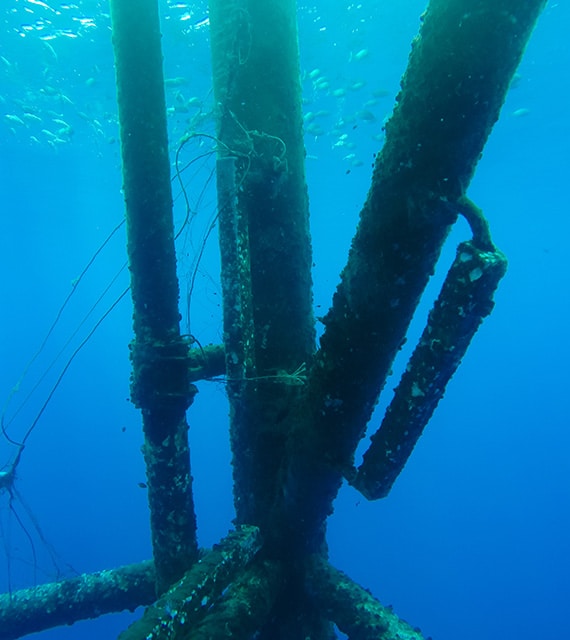
The use of cathodic protection by galvanic anode is an effective and long used method to fight against corrosion of metal structures immersed at sea (e. g. ships, docks on piles, offshore platforms…). The oxidation of these anodes, often composed of zinc or aluminium, causes the release and diffusion of metal elements in the form of ions or oxyhydroxides. With the development of ORE, the question of the effects of anode degradation has reappeared in civil society and been relayed by government departments, so it is important to be able to provide scientifically substantiated answers to this question.


ANODE Project

Objective

  • To quantify the chemical compounds emitted by the galvanic anodes of ORE structures and the risk associated with their dispersion in the marine environment

Main achievements

Literature review of cathodic protection and their potential impact on the environment.

Modelling of the dispersion fluxes of metals released into the environment at different ORE sites located on French coasts

Characterisation of the chemical risk linked to metals from galvanic anodes for aquatic species (living in the water column)

Resources generated

  • Review of the different types of cathodic protection and their impacts on the environment including an assessment of existing threshold values (such as Predicted No-Effect Concentration or PNEC) for metals released from anodes
  • Methodology for assessing the chemical risk of wind farms by combining hydrodynamic modelling of metal releases with an ecotoxicological expertise
  • Public report of recommendations (including implementation protocols) for future monitoring of metals in ORE farms

Conclusion

By combining ecotoxicological expertise and hydrodynamic modelling, the ANODE project has determined that there is no risk
associated with most of the elements making up galvanic anodes, namely zinc, iron, copper and cadmium. On the other hand, concerning aluminium, additional experiments are necessary to conclude. The two currently available Predicted No-Effect Concentrations (PNECs) do not seem suitable for this assessment. These thresholds must therefore be refined and include data from in situ measurements in order to be able to estimate the possible risk associated with aluminium releases.

Partners

This project was led by Ifremer et France Energies Marines. 

Logo France Energies Marines
Logo Ifremer
Logo EDF Renouvelables
Logo Engie Green
Logo Naval Energies
Logo EOLFI
Logo Université de Caen Normandie

Funding

This project received French State funding managed by the National Research Agency under the Investments for the Future Programme (ANR-10-IEED-0006-30).

Logo Investir l'Avenir

Accreditation

This project was certified by the maritime cluster Pôle Mer Méditerranée. 

Logo Pôle Mer Méditerranée

Pour aller plus loin

Ajoutez votre titre ici

Lorem ipsum dolor sit amet, consectetur adipiscing ut elit tellus

Ajoutez votre titre ici

Lorem ipsum dolor sit amet, consectetur adipiscing ut elit tellus

Ajoutez votre titre ici

Lorem ipsum dolor sit amet, consectetur adipiscing ut elit tellus

Know more

Would you like to know more ?