Research & Development

Projet

OPHARM2

Advanced analysis for offshore production of hydrogen from offshore wind

Context

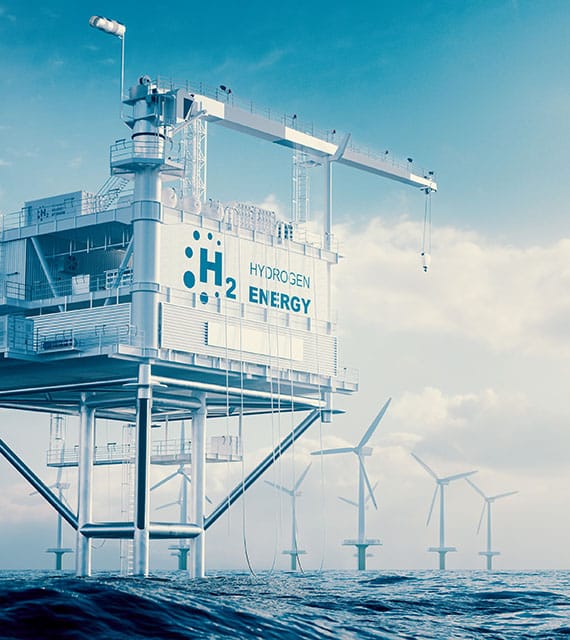
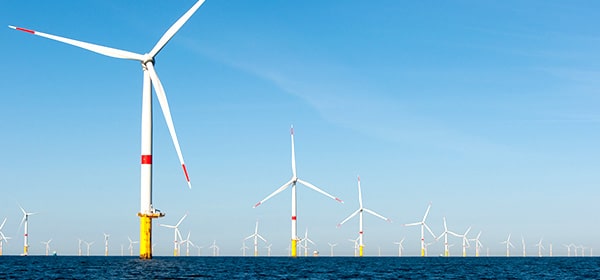
While the first industrial projects for hydrogen production coupled with offshore wind power have been announced in the North Sea, France’s ambitions in this field have yet to be defined. Offshore energy spatial planning will have strong implications for the development of future grids, which needs to be anticipated.

Some major challenges must also be investigated and lifted before hydrogen from offshore wind becomes a reality: the electrolysers location scenarios, the performance of the proton exchange membrane electrolysis technology in an offshore environment and the social acceptance of the whole.

Projet OPHARM2

Objective

  • To address a series of complementary aspects of renewable hydrogen production from offshore wind farms to support its progress towards operational deployment, including energy networks integration, technology aspects and environmental impacts

Scientific content

Networks integration

• Basin scale study: Channel, Atlantic and Mediterranean sea basins
• Local scale study: Marseille-Fos harbour and industrial site

Technology specification and sizing

• Panorama of involved technologies
• Specification and sizing of wind turbine + electrolysis system and substation + electrolysis system

Impact of motion on proton exchange membrane electrolyser performance

• Cases definition for tests
• Simulation of movements for wind turbine and substation
• Testing electrolyser performance with simulated motion

Environmental integration

• Identification of the different pressure-receiver pairs: chronic risk, accidental risk, impacts on marine compartments
• Risk characterisation of brine discharges in offshore wind farms
• Characterization of both physicochemical and biological impact of brine


Expected results

  • Methodology for local scale assessment of renewable hydrogen production-consumption scenarios for heavy industry decarbonisation
  • Hydrogen production systems specification and performance target definition from desalination unit to offshore storage
  • Identification of possible unwanted system resonance regarding the electrolyser exposed to motions of a floating platform
  • Recommendations for environmental impact assessment of the hydrogen production in marine environment using transdisciplinary approach
  • Upgraded OPHARM configuration assessment tool

Conclusion

Lorem ipsum dolor sit amet consectetur.

Sagittis maecenas aliquam integer lobortis eu dignissim blandit tellus metus. Amet et tristique malesuada mattis pharetra bibendum purus id. Risus in elit ullamcorper ut. Imperdiet amet id feugiat arcu malesuada at ut vulputate condimentum.

Partners

This project was led by France Energies Marines.

Logo France Energies Marines
Logo Capenergies
Logo EDF
Logo Eifer
Logo Farwind
Logo Persee
Logo Pôle Mer Méditerranée
Logo Shell
Logo Skyborn
Logo Subsea 7
Logo TotalEnergies
Logo Université Aix Marseille
Logo Université de Bretagne Occidentale
Logo Valeco EnBw

Funding

This project received French State funding managed by the National Research Agency under the France 2030 investment plan (ANR-10-IEED-0006-34). It also received financial support from the Bretagne, Pays de La Loire, Occitanie and SUD Provence-Alpes-Côte d’Azur regions.

Logo France 2030
Logo Région Bretagne
Logo Région Pays de la Loire
Logo Région Occitanie
Logo Région SUD Provence-Alpes-Côte d'Azur

Accreditation

This project is certified by the maritime clusters Pôle Mer Bretagne Atlantique and Pôle Mer Méditerranée.

Logo Pôle Mer Bretagne Atlantique
Logo Pôle Mer Méditerranée

Pour aller plus loin

Ajoutez votre titre ici

Lorem ipsum dolor sit amet, consectetur adipiscing ut elit tellus

Ajoutez votre titre ici

Lorem ipsum dolor sit amet, consectetur adipiscing ut elit tellus

Ajoutez votre titre ici

Lorem ipsum dolor sit amet, consectetur adipiscing ut elit tellus

Know more

Would you like to know more ?