Research & Development

Project

GEOSISMEM

Geophysical surveys for the seabed characterisation of offshore renewable energy sites

Context

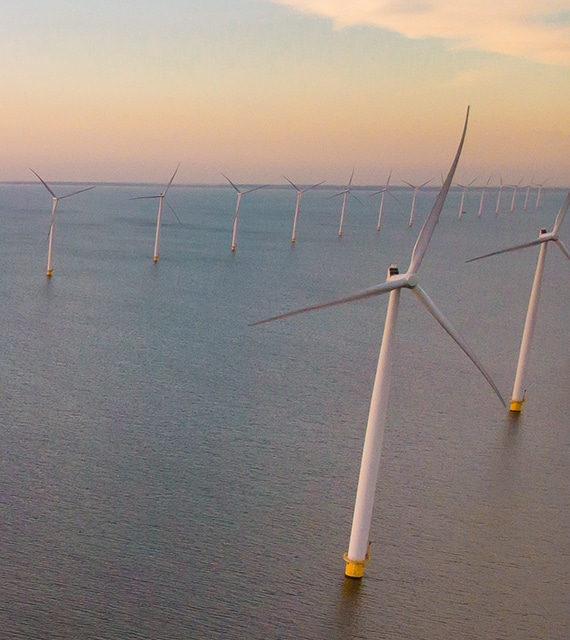
Competitiveness, and therefore cost reduction, are hot topics for offshore wind energy players. In this context, preliminary geotechnical studies are particularly concerned because they are very expensive. They are crucial for the design of wind turbine foundations as they allow the mechanics of the seabed to be characterised. However, this type of study requires campaigns at sea with the deployment of coring machines to take soil samples which are then analysed in the laboratory. It is therefore necessary to develop alternatives to the sole use of geotechnics.


Projet GEOSISMEM

Objective

  • To develop a new soil characterisation methodology based on a combination of geophysical and geotechnical data in order to make recommendations for use in the offshore wind sector

Main achievements

New methodologies for geophysical data processing

Multitrace seismic and electromagnetic geophysical measurement campaigns

Design calculation of a pile from geophysical and geotechnical data

Recommendations for the integration of geophysical data into site characterisation for project engineering

Main outputs

  • State of the art of geophysical techniques applied to the deep exploration of offshore renewable energy sites
  • Recommendations report on geophysical and geotechnical characterisation of offshore renewable energy sites
  • Paid access publication: Flamme et al. (2019) Combining marine electromagnetic and high resolution seismic imaging: application to shallow gassy environment. SAGEP Proceedings, Vol. 2019, pp. 1-4
  • Judith Flamme’s PhD thesis in 2021: Nouvelle approche de l’étude du sous-sol marin : application conjointe de l’électromagnétisme, de la sismique multitrace et de la géotechnique
  • Geophysical database acquired on the Calvados offshore wind farm site (electromagnetic and seismic) and the Groix & Belle-Île floating wind farm site (seismic)

Conclusion

GEOSISMEM carried out a geophysical eabed characterisation of the Calvados offshore wind farm and the Groix & Belle-Île floating wind farm using non-conventional methods. This was compared with the geotechnical characterisation carried out by the wind farm developers prior to the projects. The data sets from both approaches were used to carry out a pile design test. The acquisition of more consistent data would make it possible to consolidate this promising approach.

Partners

This project was led by Université de Bretagne Occidentale and France Energies Marines.

Logo France Energies Marines
Logo Université de Bretagne Occidentale
Logo Bureau Veritas
Logo EDF
Logo EOLFI Shell
Logo Eoliennes en mer Dieppe Le Tréport
Logo Eoliennes en mer Iles d'Yeu et de Noirmoutier
Logo Ifremer
Logo MAPPEM Geophysics
Logo TotalEnergies

Funding

This project received French State funding managed by the National Research Agency under the Investments for the Future Programme (ANR-10-IEED-0006-27).

Logo Investir l'Avenir

Accreditation

This project was certified by the maritime clusters Pôle Mer Bretagne Atlantique and Pôle Mer Méditerranée.

Logo Pôle Mer Bretagne Atlantique
Logo Pôle Mer Méditerranée

Pour aller plus loin

Ajoutez votre titre ici

Lorem ipsum dolor sit amet, consectetur adipiscing ut elit tellus

Ajoutez votre titre ici

Lorem ipsum dolor sit amet, consectetur adipiscing ut elit tellus

Ajoutez votre titre ici

Lorem ipsum dolor sit amet, consectetur adipiscing ut elit tellus

Know more

Would you like to know more ?

This website uses cookies

We use cookies to personalize content, provide social media features, and analyze our traffic. We also share information about your use of our site with our analytics partners. You can change your preferences at any time. For more information, please see our Privacy Policy and Cookie Policy.