Research & Development

Project

CASSIOWPE

Characterising the atmosphere and sea surface interactions for the deployment of offshore wind in the Gulf of Lion

Context

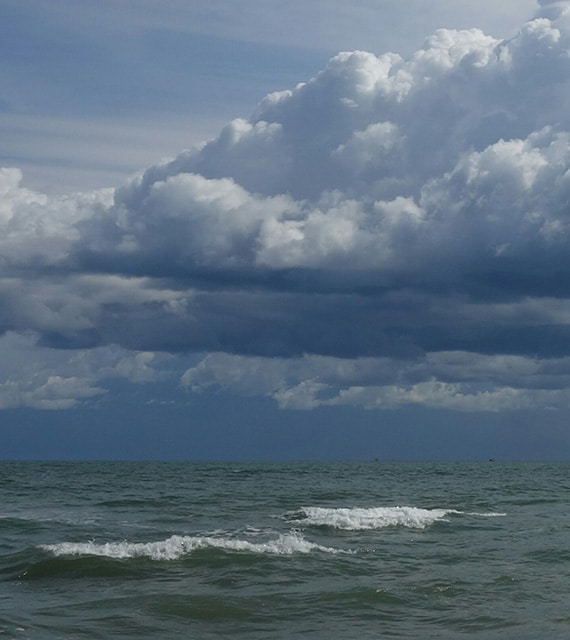
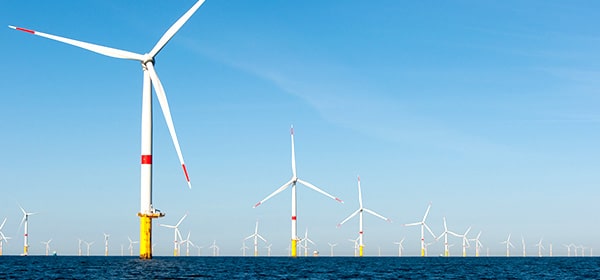
The Gulf of Lion is frequently exposed to strong winds, making it an area with high wind energy potential. The development of floating systems is favoured because the water depth increases rapidly. However, the environmental conditions in this area are complex (strong onshore winds, winter storms from the south or west, etc.), resulting in a wide variety of sea states. These meteocean conditions are not correctly reproduced in the operational numerical models currently in use.


Projet CASSIOWPE

Objective

  • To better characterise weather and ocean conditions in the Gulf of Lion to support the deployment of floating wind turbines in the Mediterranean

Main achievements

Compilation of existing in situ measurements, covering wind and sea states

Development of a coupled ocean-wave-atmosphere modelling chain to assess the impact of air-sea interactions on the wind resource

Creation of a one-year database of winds, waves and currents generated using this coupled simulation

Main outputs

  • Review of existing databases of meteocean observations carried out between 2011 and 2020 in the Gulf of Lion
  • Coupled ocean-wave-atmosphere modelling
    chain adapted to the specific conditions of
    the Gulf of Lion
  • Retrospective database for 2020 validated by comparison with observations and integrating new variables, ocean-wave-atmosphere coupling and a fine temporal resolution

Conclusion

CASSIOWPE has made it possible to develop a coupled ocean-wave-atmosphere model and associated methodology that are extremely useful for studying meteo-oceanic processes. A one-year retrospective database has been created and validated using a wide range of observations. It stands out both for its high spatial and temporal resolution and for the diversity of meteocean variables simulated. It can be used for comparisons with the databases usually used by offshore wind sector.

Partners

This project was led by Laboratoire d’Océanographie Physique et Spatiale (LOPS) and France Energies Marines.

Logo France Energies Marines
Logo LOPS
Logo Ifremer
Logo CNRS
Logo EDF
Logo ENSTA Bretagne
Logo Irphé 2020
Logo Météo France
Logo Mediterranean Institute of Oceanography
Logo RWE
Logo Shell
Logo SHOM
Logo Skyborn
Logo TotalEnergies
Logo Université de Toulon
Logo University of Delaware

Funding

This project received French State funding managed by the National Research Agency under the France 2030 investment plan (ANR-10-IEED-0006-34). It also received financial support from the SUD Provence-Alpes-Côte d’Azur region, and Pôle Mer Méditerranée.

Logo France 2030
Logo Région SUD Provence-Alpes-Côte d'Azur
Logo Pôle Mer Méditerranée

Accreditation

This project was certified by the maritime cluster Pôle Mer Méditerranée.

Logo Pôle Mer Méditerranée

Pour aller plus loin

Ajoutez votre titre ici

Lorem ipsum dolor sit amet, consectetur adipiscing ut elit tellus

Ajoutez votre titre ici

Lorem ipsum dolor sit amet, consectetur adipiscing ut elit tellus

Ajoutez votre titre ici

Lorem ipsum dolor sit amet, consectetur adipiscing ut elit tellus

Know more

Would you like to know more ?