

What topics do you work on?
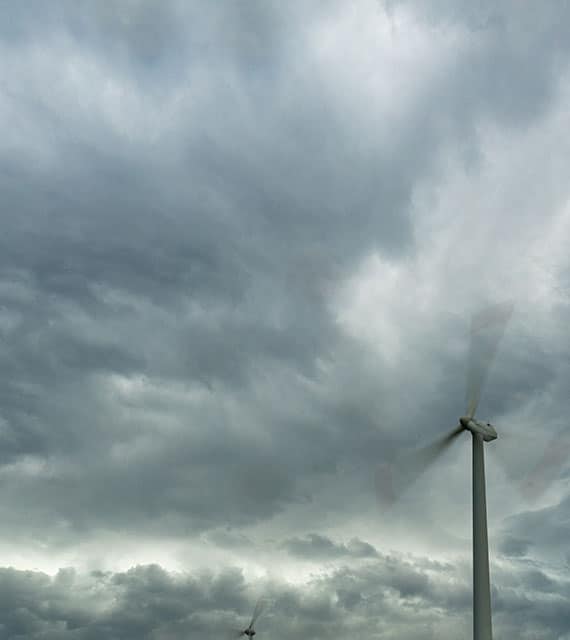
To begin with, my work was centred on ocean turbulence. With the shift in the offshore renewable energy market towards offshore wind, I now focus on atmospheric turbulence. The theoretical basis remains the same, because water and air are both fluids, but I needed to gain new skills in relation to instrumentation. Our research aims to provide wind farm developers with reliable, accurate information on turbulence intensity at the sites concerned, in order to optimise turbine design and layout. This information is obtained through reference field measurements taken with an anemometer. However, this instrument, deployed on met masts, is poorly suited to remote offshore sites. The use of remote sensing devices such as lidar is promising, yet still requires further development. This was the reason behind the POWSEIDOM research project, which came to a close in April 2024.
What were the highlights of the POWSEIDOM project?
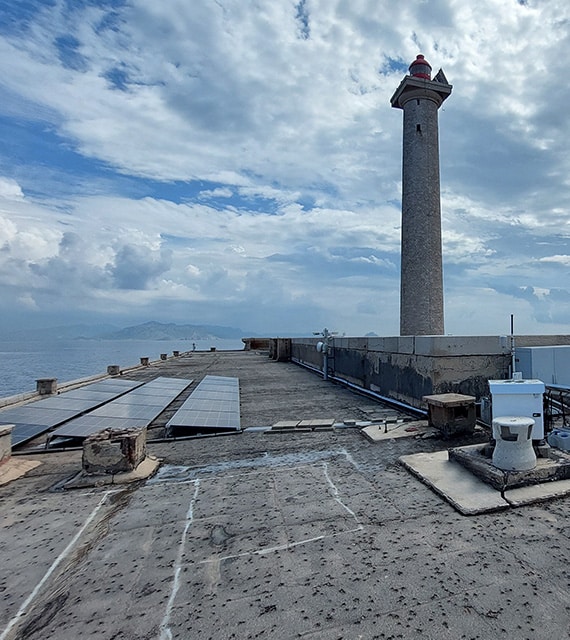
For this project, we deployed a lidar on Planier Island in the Mediterranean. We were able to challenge the WindCube profiler technology developed by Vaisala, a project partner, to improve the accuracy of turbulence measurements. We also compiled an unprecedented database of measurements recorded over a one-year period, which were then post-processed using specially developed tools. The database contains key information for industry players, including turbulence intensity, average wind speed and direction, and low-level jets. As the ultimate aim was to be able to take measurements at sea with a lidar installed on a buoy, we developed a preliminary motion compensation algorithm based on an innovative spectral approach. This algorithm will be validated during the DRACCAR-NEMO project launched in November 2023, which we are jointly coordinating together with Germany’s Fraunhofer Institute for Wind Energy Systems (Fraunhofer IWES) and which follows on from POWSEIDOM.
What are the benefits of working with Fraunhofer IWES?
It is an internationally recognised institute in the field of wind energy. Fraunhoher IWES is to provide us with a dataset acquired in the North Sea that will enable us to validate the above-mentioned algorithm. More broadly, the project aims to jointly develop a new methodology combining lidar measurements and modelling to produce an accurate and reliable spatio-temporal representation of turbulence intensity. This collaboration is beneficial to both our institutes. Another advantage is that Fraunhoher IWES is very involved in certification processes, which will be a great asset for the tools to be developed as part of the project.