Research & Development

Projet

FOWTOM

Floating offshore wind turbines operation and maintenance

Context

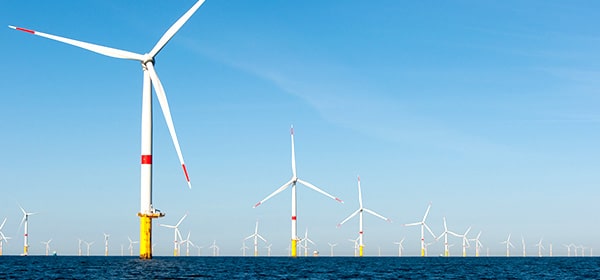
The growing size of the market for the operation and maintenance of offshore wind turbines is opening up considerable opportunities for research, development and innovation. This applies particularly to the maintenance of floating wind farms, which faces specific challenges in ensuring competitive energy costs and acceptable operational risk. This concern is all the more relevant in the Gulf of Lion, where pilot and commercial farms will soon be deployed.

Projet FLOWTOM

Objectives

  • To improve the accuracy of short-term, high-resolution metocean forecasts in the Gulf of Lion to define weather windows for maintenance operations
  • To contribute to methodologies for validating heavy lifting solutions for offshore maintenance of floating wind turbines

Main achievements

High-resolution probabilistic forecasting

• Construction of a dataset including in situ measurements and meteorological model outputs
• Development of a deep learning model for probabilistic short-term wind/wave forecasting
• Development of a visualisation interface and collection of feedback from representative end-users in order to assess the impact of probabilistic forecasting on operational decision-making

Methodology for assessing the operability of offshore maintenance solutions

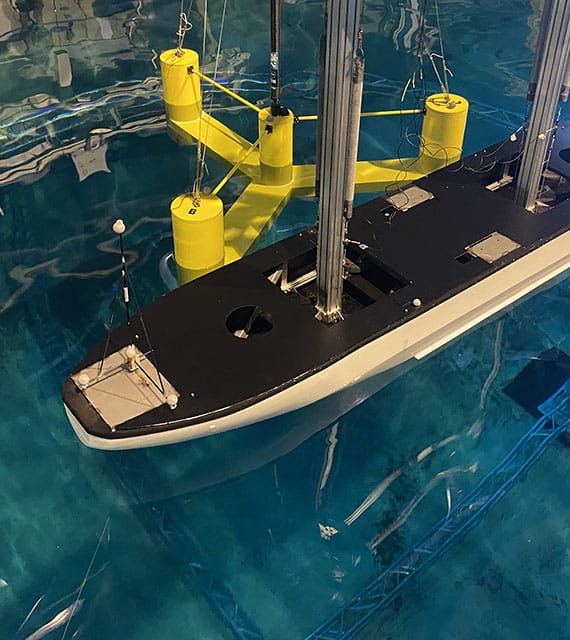
• Validation of a multi-body hydrodynamic model using tank tests
• Use of the numerical model to assess the operability of a selected heavy-lift solution, followed by development of a methodological framework


Main outputs

High-resolution probabilistic forecasting

  • Short-term metocean forecasting model based on deep learning methods and trained with in situ data
  • Interface for displaying wind/wave parameters, translating into weather windows for operations at sea


Assessment of offshore maintenance solutions operability

  • Numerical modelling of a maintenance vessel and a 15 MW wind turbine, mounted either on a semi-submersible float or on a tension-leg platform
  • Development of an assessment methodology for the major component replacement, including the definition of use cases, criteria and operability thresholds

Project sheet

Pitch vidéo

Webinaire

Rapports publics

Conclusion

A high temporal resolution metocean forecasting model based on deep learning methods has been developed. An interface fed by the outputs of this model provides a probabilistic display of the weather windows for operations at sea. At the same time, a methodology for assessing the operability of solutions for replacing a major component between two floating bodies was developed, then validated with tank trials.

Partners

This project was led by France Energies Marines.

Logo France Energies Marines
Logo EDF
Logo Ifremer
Logo IMT Atlantique
Logo Innosea ABL Group
Logo Jifmar Offshore Services
Logo SBM Offshore
Logo Shell
Logo Skyborn
Logo SOFRESID Engineering

Funding

This project received French State funding managed by the National Research Agency under the France 2030 investment plan (ANR-10-IEED-0006-34). It also received financial support from the Brittany region.

Logo France 2030
Logo Région Bretagne

Labellisation

Lorem ipsum dolor sit amet consectetur. Sagittis maecenas aliquam integer lobortis eu dignissim blandit tellus metus. Amet et tristique malesuada mattis pharetra bibendum purus id. Risus in elit ullamcorper ut. Imperdiet amet id feugiat arcu malesuada at ut vulputate condimentum.

Pour aller plus loin

Ajoutez votre titre ici

Lorem ipsum dolor sit amet, consectetur adipiscing ut elit tellus

Ajoutez votre titre ici

Lorem ipsum dolor sit amet, consectetur adipiscing ut elit tellus

Ajoutez votre titre ici

Lorem ipsum dolor sit amet, consectetur adipiscing ut elit tellus

Know more

Would you like to know more ?