Research & Development

Projet

TROPHIK

Modelling the role of offshore wind farms in modifying the functioning of coastal food webs and cumulative impact

Motivation & background

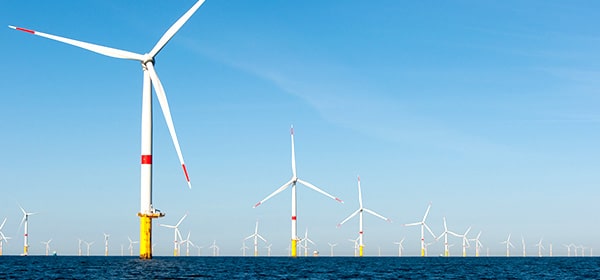
The environmental impact studies of offshore wind projects focus on considering the sensitivity to potential disturbances of each of the ecological compartments (benthos, birds, marine mammals) in a fractional way. In this context, it is necessary to develop an integrated view of the ecosystem, through the implementation of modelling tools, allowing to consider the trophic food web as a whole. This approach is complementary to those used during impact studies.


TROPHIK Project

Objective

  • To model the role of offshore wind turbines and other anthropogenic activities in modifying the functioning of thefood webs of the Bay of Seine by taking climate change into account.

Main achievements

Statistical modelling of the Bay of Seine ecosystem and study of the sensitivity of network indices to cumulative impact

Spatial 2D modelling of the food web of the extended Bay of Seine

Modelling of the effect of climate change (IPCC scenarios RCP 2.6 and RCP 8.5) on the modification of the distribution ranges of the 73 most sensitive species in the ecosystem

Modelling of different anthropogenic pressures and climate change on the emerging properties of the food web

Resources generated

  • Models representing the trophic functioning of the ecosystem from 0 to 2 dimensions (Ecopath, Ecosim, Ecospace) or statistical (inverse linear)
  • Methodology for modelling the current and future distribution of marine species at the local scale

Conclusion

TROPHIK has initiated a methodology to move from the sectoral vision of environmental impact studies to a functional and holistic approach. The analysis of the sensitivity of the functioning of the food web to the development of offshore wind farms represents a solid basis for recommending new areas of implantation. This approach will be completed within the framework of APPEAL and WINDSERV by integrating the societal and economic environment as well as biogeochemical forcings.

Partners

This project was led by Université de Caen Normandie and France Energies Marines.

Logo France Energies Marines
Logo Université de Caen Normandie
Logo CNRS 2023
Logo Parc éolien en mer du Calvados

Funding

This project received funding from France Energies Marines and its members and partners, as well as French State funding managed by the National Research Agency under the Investments for the Future Programme (ANR-10-IEED-0006-12).

Logo Investir l'Avenir

Accredidation

This project was certified by the maritime cluster Pôle Mer Bretagne Atlantique. 

Logo Pôle Mer Bretagne Atlantique

Pour aller plus loin

Ajoutez votre titre ici

Lorem ipsum dolor sit amet, consectetur adipiscing ut elit tellus

Ajoutez votre titre ici

Lorem ipsum dolor sit amet, consectetur adipiscing ut elit tellus

Ajoutez votre titre ici

Lorem ipsum dolor sit amet, consectetur adipiscing ut elit tellus

Know more

Would you like to know more ?