DIONYSOS
Digital intelligent operational network using hybrid sensors / simulations approach
Duration: 36 months (2021 - 2024)
CONTEXT
At both national and international level, offshore wind is now recognised as one of the pillars of the energy transition. Floating wind technology will gradually take on a significant market share in this sector. In order to control the economic equation linked to maintenance costs, it is crucial to have effective tools for optimising maintenance and improving the management of system lifetimes. One of the major challenges therefore lies in the ability to assess the actual state of fatigue of structures, and to identify any potential anomalies.

OBJECTIVE
To develop and test an in-service fatigue monitoring system for floating wind turbines combining sensors and numerical simulations
main achievements
- Development of a digital model of a floating wind turbine
- Specification and deployment of sensors on a machine at sea and in operation
- Development of a software platform for coupling and analysing the data collected at sea with that from the numerical simulations
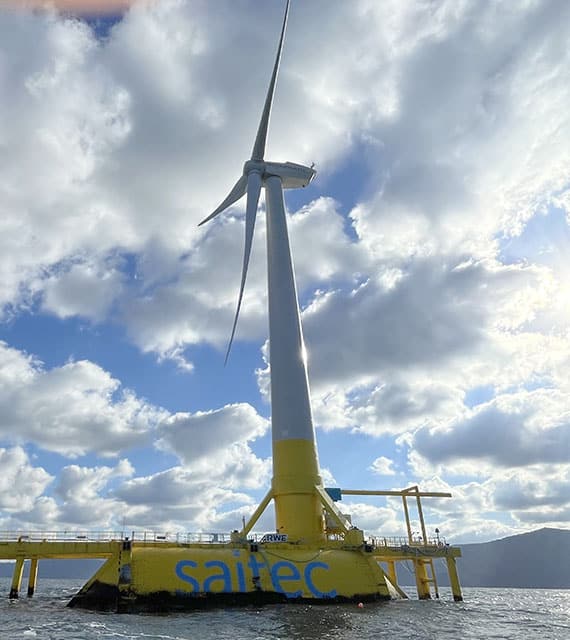
- Testing of the digital twin on two floating offshore wind turbines: Zefyros (off Norway) and DemoSATH (off Spain)
- Development of two methods for better detection and categorisation of anomalies in the behaviour of floating offshore wind turbines
main outputs
- Software platform for data retrieval and filtering, forcing with environmental data, and data storage
- Simuoptuna: tool for optimising the intrinsic parameters of the numerical models involved in modelling a floating offshore wind turbine
- Torchydra: models and tutorials for organising the repository of deep learning models
- Zefyros OpenFAST: OpenFAST numerical model of the Zefyros wind turbine validated with measurements on the offshore system
- TwinViews: graphical interface for comparing simulations with in situ measurements, including an advanced graphical visualisation system
conclusion
In the framework of DIONYSOS project, several high-performance tools were developed for in-service monitoring of floating offshore wind turbines using a hybrid approach combining sensors and numerical simulations. These tools, tested and validated on two demonstrators deployed at sea, provide real added value in terms of improving the reliability of floating systems.
RESOURCES
PARTNERS AND FUNDING
This project was led by France Energies Marines.


The total budget of this project was €1,302K.
This project received funding from France Energies Marines and its members and partners, as well as French State funding managed by the French National Research Agency under the France 2030 investment plan. This project was financially supported by Pôle Mer Bretagne Atlantique.

Photo credit: Yohann Boutin