2C NOW

Climate change impact on offshore wind

Duration: 18 months (2023-2025)

Context

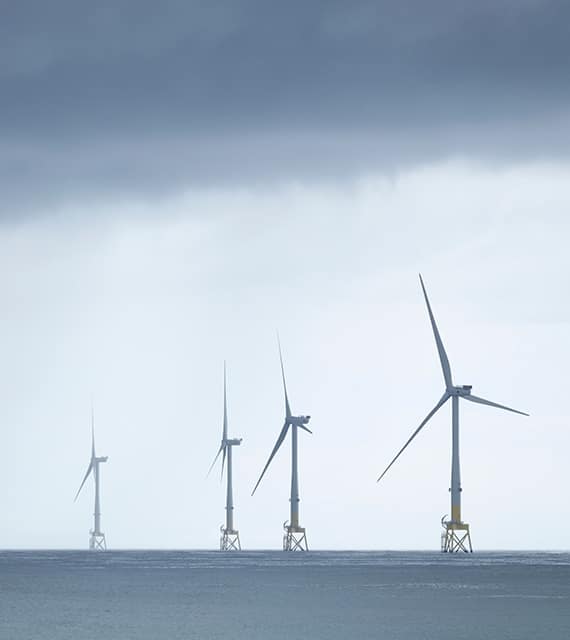
Over the lifetime of an offshore wind farm, wind resource could change, leading to a change in the associated energy production. This would then have an impact on the initial business plan. Climate change could also affect the length or intensity of seasons and have an effect on the balance between energy supply and demand. The intensity and frequency of extreme winds can also vary and have an impact on the design of wind turbines or on foundations, mooring lines, substations and electrical export cables. Extreme waves and rising sea levels must also be taken into account as they are design factors for these systems.


Objectives

  • To provide stakeholders in the French offshore wind energy sector with various appropriate indicators to assess the evolution of wind resources, associated production and design conditions over the coming decades.
  • To assess the uncertainties of current approaches and reduce the risk of a conservative approach, in order to lower CAPEX and improve the business plans of farm developers

main achievements

  • Production of indicators specific to offshore wind in terms of the impact of climate change on energy production, as well as changes in waves and water levels
  • Characterisation of the evolution of extreme events and their intensity
  • Estimating wind turbine mast fatigue based on the evolution of wind and wave conditions
  • Characterisation of the impacts on the coastline for the landing of electrical cables and their connection to the grid

main outputs

  • Exhaustive literature review covering the main trends and physical mechanisms of climate change, highlighting their application to the offshore wind sector
  • Analysis of the effects of climate change on wind resources and the design of offshore wind farms
  • Online plateforme comprising:
    • Graphs showing changes in wind, waves and water levels on each French metropolitan coastline, enabling the effects of climate change to be quantified (free access)
    • Statistics specific to offshore wind (access restricted to project partners)

Conclusion

The results of 2C NOW suggest a slight decrease in average wind conditions that could impact wind power production on the French coasts by 2050. They also show an increase in the intensity of extreme events, particularly waves, which determine the technologies design. These trends are more pronounced in scenarios with high greenhouse gas emissions. This should be viewed with caution, given the high level of uncertainty associated with the results from the various climate projection models.

Associated Resources

2C NOW fact sheet (PDF)

Pitch of 2C NOW project presentation

Pitch of 2C NOW project results

2C NOW final webinar

Coastal evolution due to climate change and the impact on cables in the landfall zone (PDF)

Comparisons and corrections of climate models for waves and water levels along the French coasts (PDF)

Evaluating the quality of recent reanalyses for wind speed along the French coastline (PDF)

State of the art of climate change impact on offshore wind (PDF)

Partners and funding

This project was led by RTE and France Energies Marines.

innosea logo 2024
skyborn logo 2023

The total project budget was €725K.

This project received funding from France Energies Marines and its members and partners, as well as French State funding managed by the National Research Agency under the France 2030 investment plan.

France 2030 logo

Photo credit: Richard Johnson/AdobeStock

Closed search overlay screen